Factories, production & packing lines
Manufacturing manual handling training
Online manual handling training for production and packing line work, where the risk is less the one heavy lift and more the light one repeated all shift.
Go straight to the assessment
Trained before? Answer 20 real warehouse scenarios — no time limit. Score 75% and your certificate is issued the same day.
Start the assessmentLearn first, then the assessment
8 short modules on lifting, carrying, pushing and pulling, about 55 minutes. Free, and your progress is saved as you go.
Start the free courseEither way you pay $39 only after you pass · unlimited attempts · no account needed
Course & assessment
Free
Certificate
$39 one-off
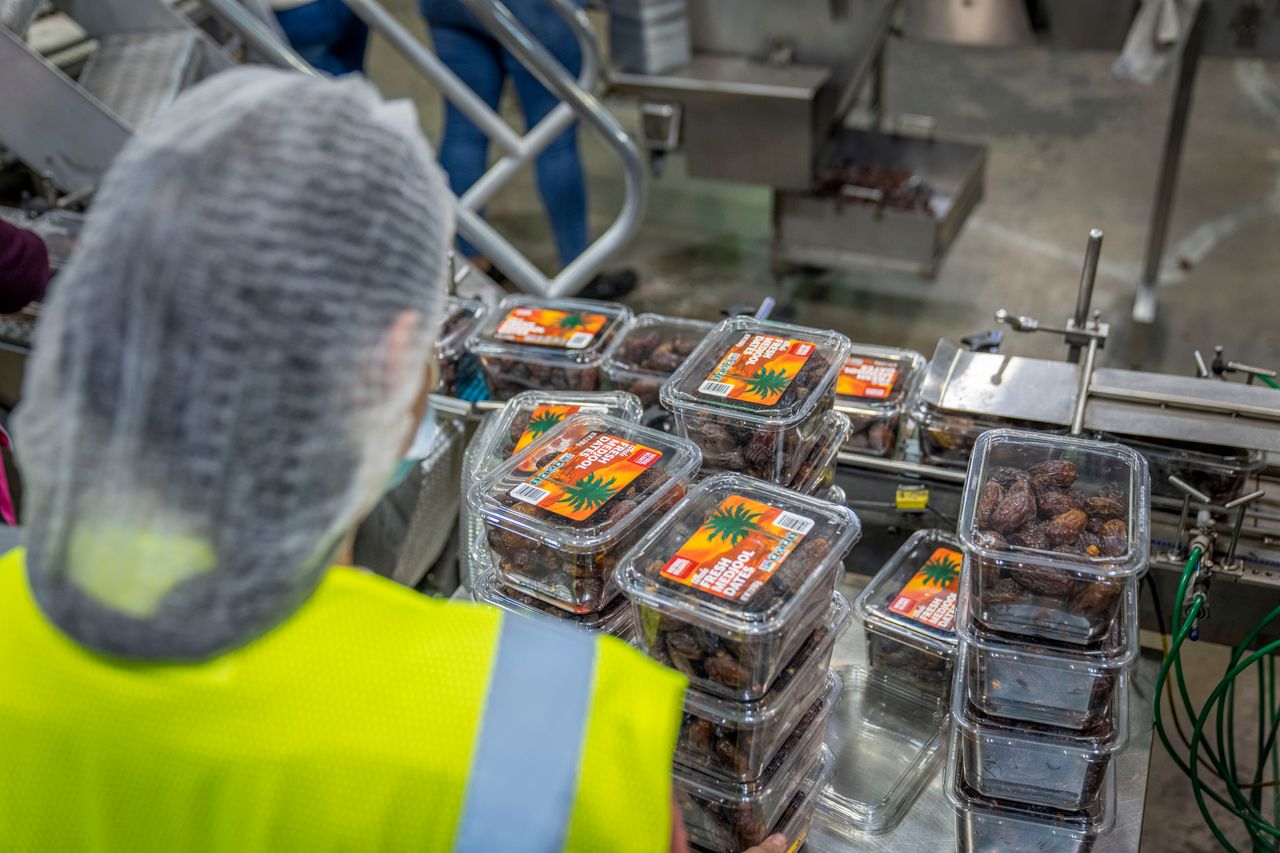
Why the factory floor is different
Light loads, thousands of times
Production injuries are mostly not about weight. They come from repetition, fixed posture and a pace you do not control.
The line sets the pace
On a packing line or at a machine, you do not choose when the next item arrives. Repetition at someone else's speed is the most common route to shoulder, wrist and back injuries in production.
Raw material bags
20 to 25 kg sacks of powder, granules or ingredients — floppy, hard to grip, often lifted from a pallet at floor level into a hopper above waist height.
Bins, tubs and totes
Parts bins and product tubs that are fine empty and heavy full, slid along benches and lifted onto conveyors, many times an hour.
Fixed workstations
A bench that is the wrong height for you is the wrong height every minute of the shift. Awkward posture held for hours adds up even with light items.
Loading and unloading machines
Feeding sheet, coil or parts into a machine often means reaching over guards or into the machine with the load at arm's length.
End of line palletising
Finished cartons stacked onto pallets by hand: bottom layers at floor level, top layers above the shoulder, the same carton hundreds of times.
On the line
The hopper at the mixing station
Twelve 25 kg bags per batch, from a pallet on the floor into a hopper at chest height, four batches a shift. That is 1.2 tonnes lifted from the floor to above the waist, by one person.
What the course would have you notice: the problem is the pallet height, not your technique. A pallet raised on a lifter or stand removes the floor-level part of every lift — that is the kind of control the course asks you to look for and report, before anyone tries to fix it by lifting harder.
Fully online
Work through it on your phone during a break or on a laptop at home. Nothing to install.
About an hour
Eight short modules with concise, practical content. Stop and resume whenever you like.
Free assessment
20 scenario-based questions. Pass mark is 75%, and you can retry as many times as you need.
Pay only if you pass
Training and assessment cost nothing. The optional certificate is $39 AUD after you pass.
From the free course
Most relevant modules
How it works
Four steps from start to certificate
01
Start the free training
Open module one — no signup, no payment details.
02
Work through 8 modules
Short lessons, warehouse examples and quick knowledge checks.
03
Sit the free assessment
20 multiple choice questions. 75% to pass, unlimited retries.
04
Add a certificate (optional)
Passed? Get your Certificate of Completion for $39 AUD.
Questions
Manufacturing questions
Keep reading
Related pages
Who it's for
Where you work
About the training
This is non-accredited general awareness training and does not issue a nationally recognised Statement of Attainment. Always confirm your employer's specific training requirements.
Get your manual handling certificate
Go straight to the assessment, or learn first with the free course. Pay $39 only when you pass.